Are “corrupt my file” sites safe? What to know before uploading a file
Posted on
by
Kamso Oguejiofor-Abugu


Avoid uploading personal, work, or school documents to an unfamiliar “corrupt my file” site. These services usually need the original document before returning a damaged version, which can expose its contents to the operator. Not every service is malicious, but you may not know how your file is stored or used. Some tools also collect details such as your IP address and browser type.
For software testing, use a disposable file with no sensitive content or metadata and a tool you trust. If you’re dealing with a document that’s already broken, make a copy first and keep the original untouched while you try recovery methods.
This guide breaks down what file corruption is, the security risks around file corrupter tools, and the safest ways to restore a damaged file.
What is a corrupted file?
A corrupted file is a file with data that’s damaged or saved incorrectly. As a result, your app can no longer open or read the file properly.
In some cases, the file simply refuses to open. Other times, it might open, but show scrambled text, broken visuals, stuttering video, or an error screen instead of your content.
File corruption usually happens unexpectedly during normal daily use. It typically comes down to a few familiar situations:
- An app closing unexpectedly while saving
- A download cutting out before it finishes
- Your Mac shutting down or restarting while a file is in the middle of saving
- A storage device beginning to fail
- An interrupted file transfer, whether over cloud sync, an email attachment, or a thumb drive
- Malware interfering with or damaging your saved data
What do “corrupt my file” sites do?
Corrupt file websites take a working document and deliberately break it so it no longer opens correctly. You upload a healthy document, the tool scrambles part of its internal code, and you download the broken copy.
This is occasionally useful in technical work. Software developers sometimes use broken files to see if an app can handle unexpected errors without crashing. They typically use disposable, non-sensitive files on file corrupters they fully understand or control. That kind of controlled testing is very different from handing over personal, work, or school documents to a random website.
Why are “corrupt my file” sites risky?
File corrupter websites aren’t necessarily malicious, and using one won’t automatically compromise your device. Even so, sending a file to an unfamiliar website means handing over your information to an operator you know nothing about, and that comes with trade-offs.
- The site gets your original document first: Before a service can break your file, it has to receive the readable version. That means someone on the other end likely has a clear copy of your document, even if only for a short time.
- Files hold more data than what appears on the page: Most documents store hidden details in the background. Author names, past edits, internal comments, and client details often remain attached to the file even if you can’t see them on screen.
- There is no way to confirm your file is erased: A website may promise to delete your upload right away, but you have no way to verify whether that copy is actually gone.
- The returned file may contain unexpected changes: These services don’t always behave predictably. The file you get back may look different, open incorrectly, or reveal more (or less) than you intended.
- It might not even work: Someone who receives the file might be able to recover some of its contents or simply ask you to resend it, which can create more explaining to do, not less.
- Some sites collect other information: This could include things like your IP address or browser type, sometimes outlined in a privacy policy you’d have to read thoroughly.
Safer alternatives to deliberately corrupting a file
If you need more time or a file is genuinely giving you trouble, you have safer choices that keep your documents off unfamiliar websites. You could:
- Ask directly for more time: Most instructors and managers are far more willing to give you a short extension than to try opening a file that will not load.
- Turn in what you have: If you have finished part of the project, handing that in shows good faith and avoids the complications of handing in an unreadable file.
- Share a cloud document: Platforms with built-in edit histories automatically keep track of your changes, so you have a clear record of the work you put in and when you did it.
- Describe what went wrong: If a technical glitch got in the way, simply explain what happened. Including a quick screenshot or time-stamped note can help clear up any confusion.
If you’re testing how an app handles broken files, use a disposable document with no sensitive content or metadata and a tool you trust.
What does a corrupted file look like?
The common signs of a corrupted file are usually pretty recognizable:
- The app tells you the file is damaged or can’t be opened
- The file opens, but part of the content is missing
- A photo in the file shows blocks of color, streaks, or distorted sections
- A video in the file freezes partway through or cuts off before the end
- The file opens to a wall of random symbols and broken text
- The file size is unexpectedly small or shows as 0 bytes
Seeing signs of file corruption doesn’t mean your Mac has a virus. However, if your Mac is running slow or throwing unexpected pop-ups on top of having corrupted files, running a quick virus scan is a reasonable next step just to be sure.
If several files on the same drive are affected at once, that’s more likely to indicate a problem with the drive itself than with any single document.
How to fix a corrupt file on Mac
If a file refuses to open or behaves strangely, try these steps before giving up on it:
- Make a copy before doing anything else: Working with a duplicate ensures you won’t accidentally make the original file harder to recover while testing fixes.
- Try downloading or transferring it again: If you received it by email, downloaded it from a website, or stored it in the cloud, get a fresh copy. An interrupted download or transfer may be the problem.
- Check the app you used to create or open it: Programs like Word, Pages, or specialized editors often have built-in repair or auto-recovery prompts that can help.
- Look for a saved earlier version: Check Time Machine or the version history in the app you used to create the document. In supported Mac apps, choose File > Revert To > Browse All Versions.
- Try another trusted app: Some applications can open or recover files that another app has trouble reading.
- Test your drive: If more than one file is affected, back up any files you can still access to another drive. Then open Disk Utility and run First Aid to check for disk errors.
- Scan your Mac if the cause is unclear: If files are becoming corrupted unexpectedly or you notice other suspicious behavior, a malware scan can check for known threats.
- Consider professional recovery for important files: If the document is irreplaceable and software fixes haven’t worked, a professional data-recovery service may be able to help without risking further damage.
Can antivirus help with corrupted files?
Antivirus software can’t repair a document damaged by an interrupted save, a failing hard drive, or an intentional corruption tool. That said, if a file breaks at the same time you notice other unusual behavior on your Mac, it’s worth checking whether something more is going on.
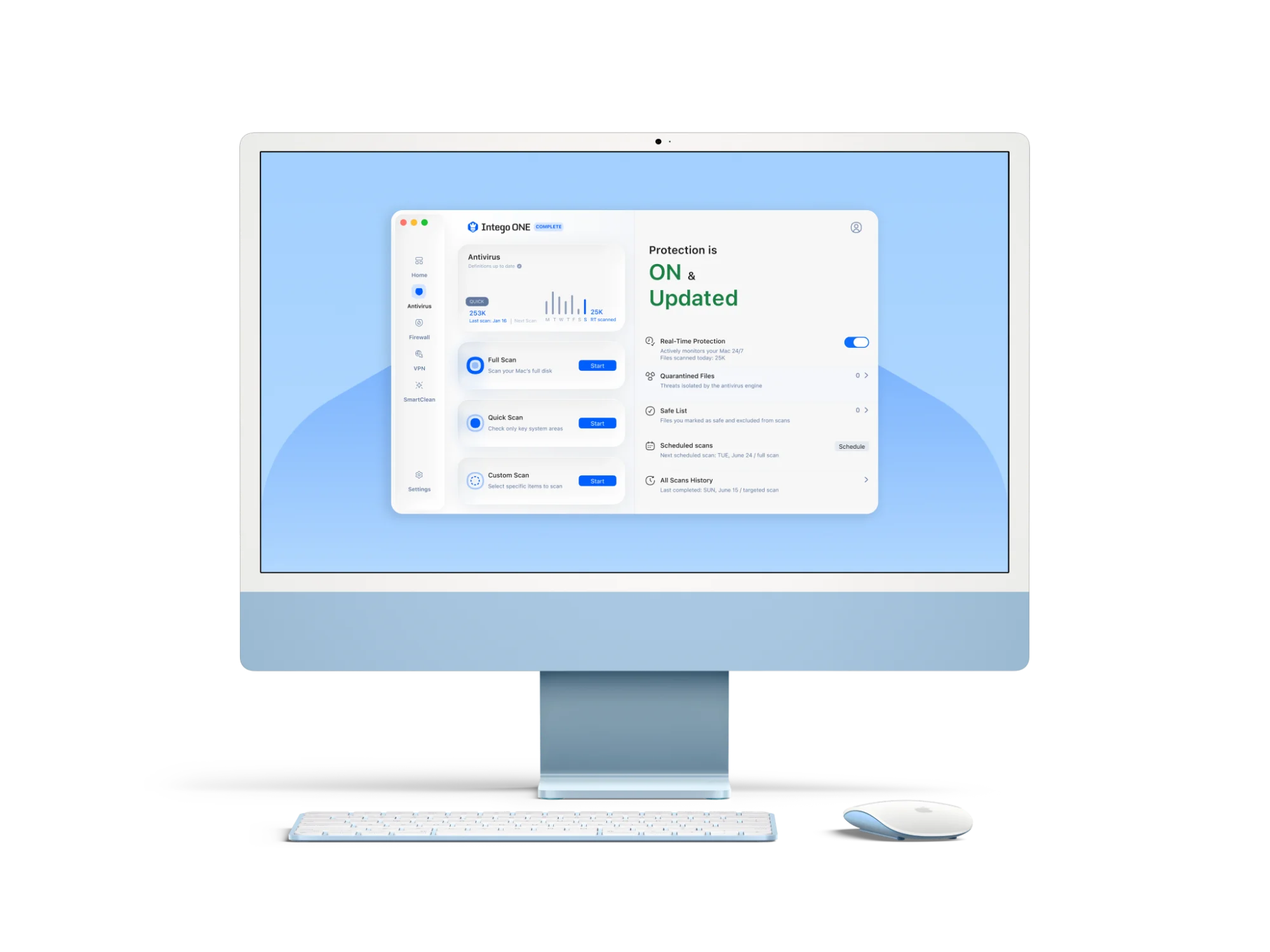
Intego ONE lets you scan your Mac for known threats when file damage comes with other suspicious behavior. Its real-time protection checks files as you download or open them, helping stop malware before it can harm your Mac.
Regular backups with Time Machine or another backup service help you recover files if something goes wrong. iCloud Drive keeps files in sync across devices, so it shouldn’t be your only safeguard against file damage.
Protect your Mac with Intego ONE
Frequently asked questions
Are corrupted files dangerous?
Usually not. Corruption simply means a piece of data didn’t get saved or stored correctly. It rarely has anything to do with malware or a security threat.
Does a corrupted file mean my Mac has a virus?
Not on its own. Most damaged files stem from simple everyday hiccups like a download that dropped halfway through, a laptop lid closed mid-save, or a storage drive failing. A virus is rarely the reason.
Can someone recover a deliberately corrupted file?
Sometimes, at least partially. Depending on how the file was altered, parts of the original content may still be readable or recoverable.
Can I safely upload a blank file to a file corrupter?
An empty document reduces what you might expose, but it doesn’t make an unfamiliar website safe. It may still contain details such as the author’s name. For software testing, use a disposable file with no sensitive content or metadata and a tool you trust. If you need more time on a project, look for alternatives to deliberately damaging a file.
Can a corrupted file be repaired?
Yes, in some cases. Some apps can repair minor damage on their own, and restoring an earlier version from a backup usually gets you back to a working copy.
Why do files become corrupted on a Mac?
It usually happens when something interrupts your Mac while it’s in the middle of a task. These could be a sudden drop in power, a lost Wi-Fi connection during a download, or closing an app before it finishes saving. Physical wear on an aging drive could cause it as well.
What should I do if several files suddenly won’t open?
Avoid repeatedly modifying the affected files. Look for backups or earlier versions, and back up any files you can still access to another drive before running Disk Utility’s First Aid. Scan your Mac if you also notice suspicious behavior.