Which Apple Watch Model Is Right for You (2026)?
Posted on
by
Kate Hawkins

Choosing an Apple Watch is less about the spec list and more about how it feels to wear and use every day. While every model keeps you connected and tracks your activity, they differ in size, battery life, comfort, and how easily they fit into your routine.
This guide focuses on those practical differences — like how often you’ll need to charge it and how much space it takes up on your wrist — so you can choose the model that makes the most sense for your habits.
Quick picks
If you want a quick answer, these are the Apple Watch models that make the most sense for different priorities:
- Best for most people: Apple Watch Series 11
- Best for workouts and outdoor use: Apple Watch Ultra 3
- Best for a lightweight, budget option: Apple Watch SE (3rd generation)
The table below gives a quick overview of the main differences between these models:
| What matters | Series 11 | Ultra 3 | SE (3rd gen) |
| Everyday comfort | Light and easy to wear | Larger and heavier on the wrist | Lightest and easy to wear on smaller wrists |
| Battery in real use | Up to 24 hours on a full charge | Up to 42 hours on a full charge | Up to 18 hours on a full charge |
| Health tracking | Detailed insights with advanced heart health features | Most complete set of health and activity tracking tools | Covers the basics for sleep, heart rate, and activity tracking |
| Durability and water use | Handles daily wear, swimming, and general water exposure | Built for tougher conditions, deeper water, and outdoor use | Suitable for daily wear and occasional swimming |
| Starting price | From $399 | From $799 | From $249 |
What to know before buying an Apple Watch in 2026
Before choosing a model, it helps to think about how you’ll actually use the watch day to day. On paper, many of the features can look similar, but differences in size, battery life, durability, and health tools are what you’re most likely to notice once you start wearing it.
Size and comfort
The physical size of the watch is usually one of the first things you’ll notice. Some Apple Watches feel light enough to forget about, which makes them more comfortable to wear all day or while sleeping. A larger screen is easier to read at a glance, but feels heavier and bulkier over time.
Battery life in daily use
Most Apple Watches need daily charging, much like your phone. Some models give you more breathing room, lasting between 24 and 42 hours on a single charge, while others may need a quick top-up if you want to wear them longer.
Health and fitness tracking
Each Apple Watch monitors your daily activity and exercise at a basic level. Higher-end models add more advanced health tools, including features that monitor things like blood oxygen levels and slight variations in body temperature. These tools provide insight into your long-term health, but they aren’t essential for basic fitness tracking.
Durability and water use
Most Apple Watches can handle a rainy day or a swim in a pool, but some are built for tougher conditions. If your hobbies are a little more rugged — like rock climbing or scuba diving — it may be worth choosing a model with more durable materials and extra features designed for those environments.
GPS or cellular
The standard GPS option is usually the right choice if your phone is normally nearby. It does everything most people need as long as your iPhone is in your pocket or bag. A cellular version makes more sense if you want to leave your phone at home for a walk, run, or quick errand and still be reachable.
Which Apple Watch should you choose?
Because everyone uses their Apple Watch in different ways, it helps to look at how each model fits into real daily use. The sections below focus on the key features and practical differences so you can see which one makes the most sense for you.
Apple Watch Series 11
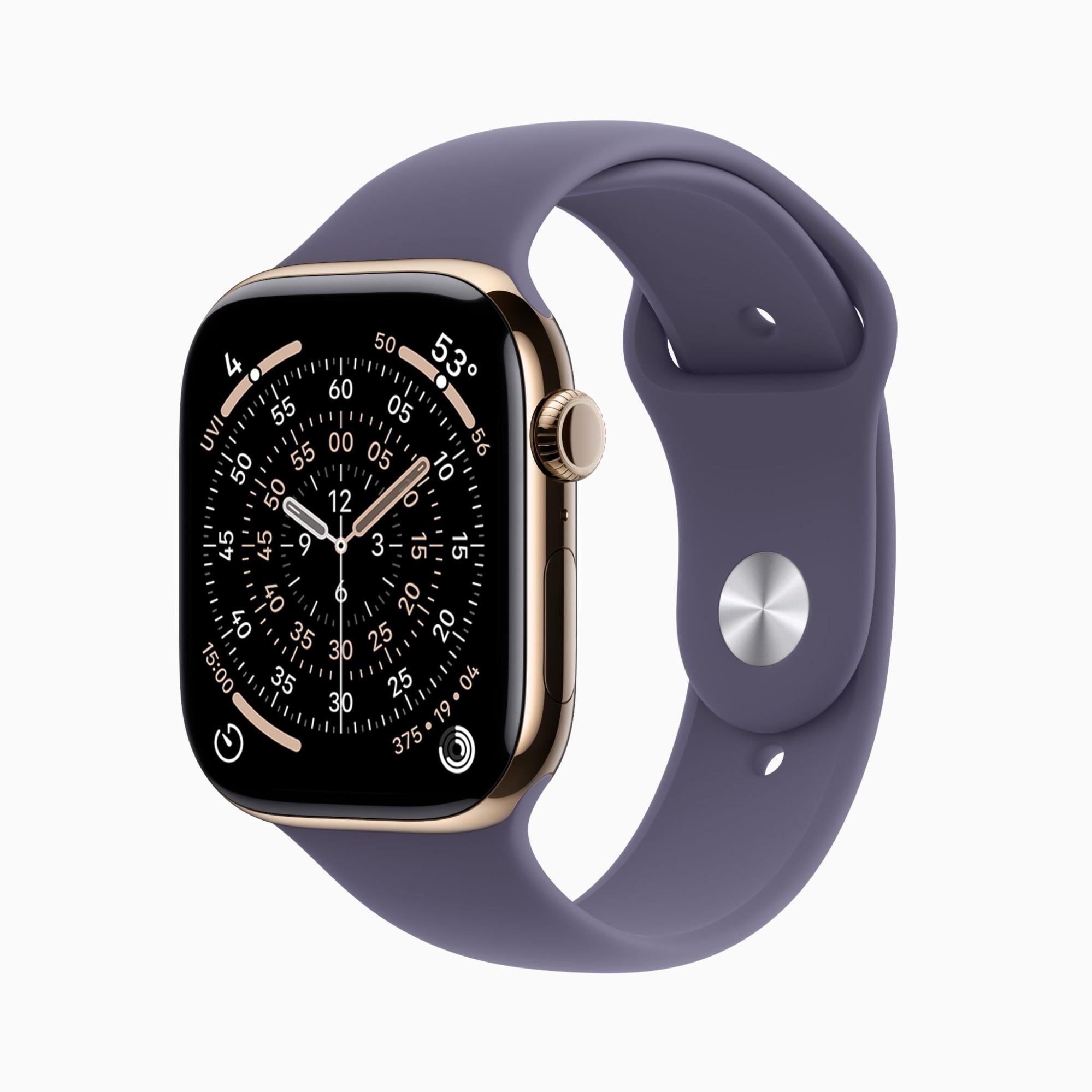
The Apple Watch Series 11 is designed to be a reliable, quiet presence on your wrist. It handles the things you do most often, like checking a message or tracking exercise, without needing much attention or setup.
At 43 grams or less, depending on the case, it’s comfortable enough to wear all day. You’ll probably still need to charge it daily, but a short 15-minute charge is enough to give you around 8 hours of use — helpful if you need a quick top-up before heading out.
Beyond step counting and exercise logging, this model includes sensors that monitor your heart rhythm and blood oxygen, along with changes in body temperature. Having these tools in one place can make it easier to spot broader patterns or notice shifts in your health over time.
The Series 11 has a bright, easy-to-read screen, even in direct sunlight, without feeling overly large or heavy on the wrist. It’s a practical choice if you want a strong mix of health features, comfort, and everyday usability.
Best for: daily use, steps and exercise tracking, messaging and calls
Not ideal for: tougher outdoor use, deep water activities
Apple Watch SE 3
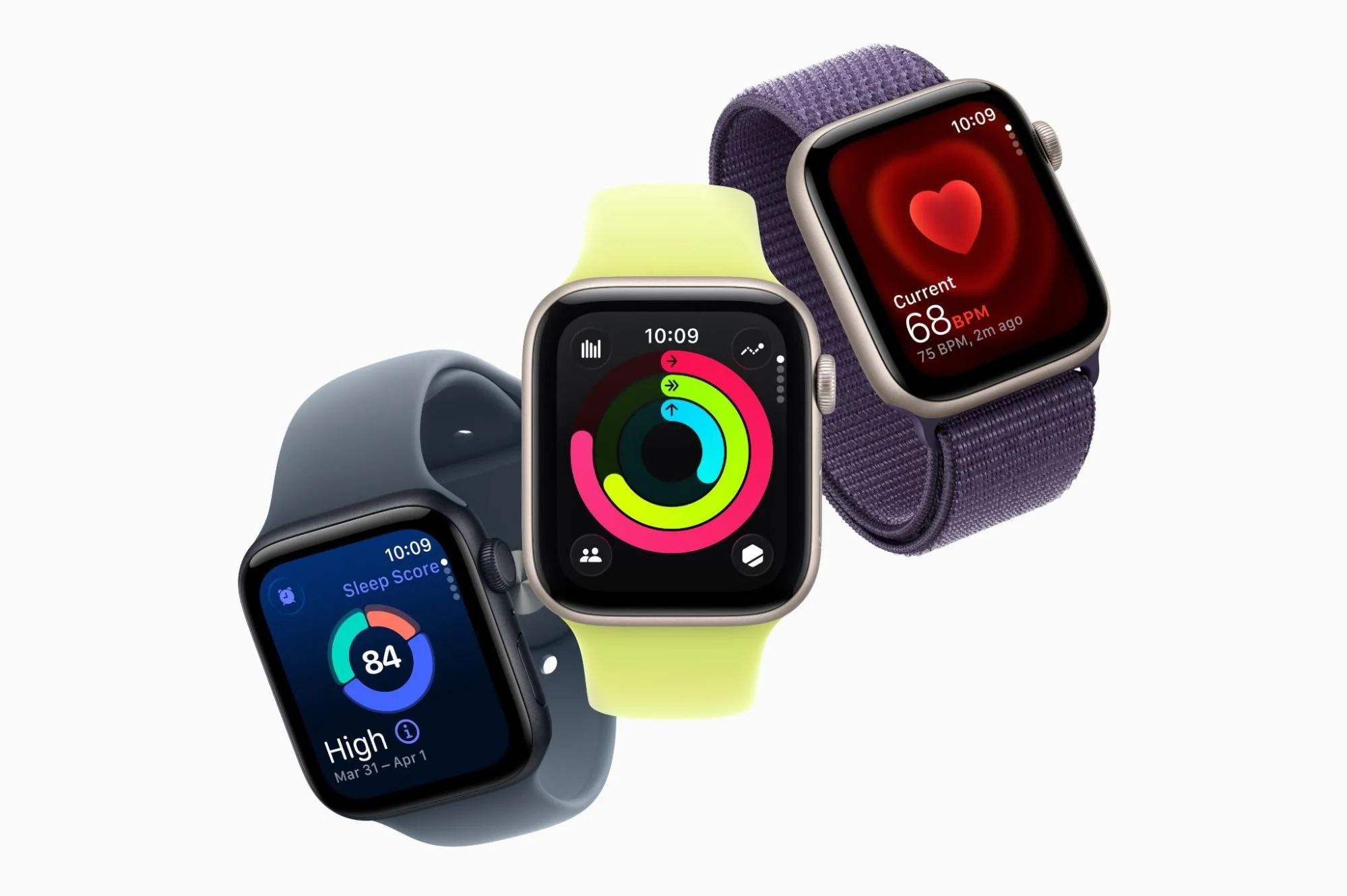
The SE 3 is a straightforward, lightweight choice that covers the basics well. It focuses on the tools people use most, like messages, notifications, and daily activity tracking, without adding the extra sensors found on more expensive models. At just 32 grams for the larger case, it’s the lightest model in the lineup, which makes it easy to wear all day and through the night for sleep tracking.
While it doesn’t include advanced tools like blood oxygen tracking or ECG app, it still provides useful heart health notifications for irregular rhythm or high and low heart rate. The screen is clear and easy to read indoors, though it may be a little harder to see in very bright sunlight compared to the more expensive models.
Because it’s smaller and lighter, the SE is often the most comfortable option for children or teenagers. It gives them a simple way to stay connected and track activity in a watch that feels light and easy to wear.
Best for: affordability, smaller wrists, children and teens, basic connectivity
Not ideal for: in-depth health tracking, larger frames
Apple Watch Ultra 3
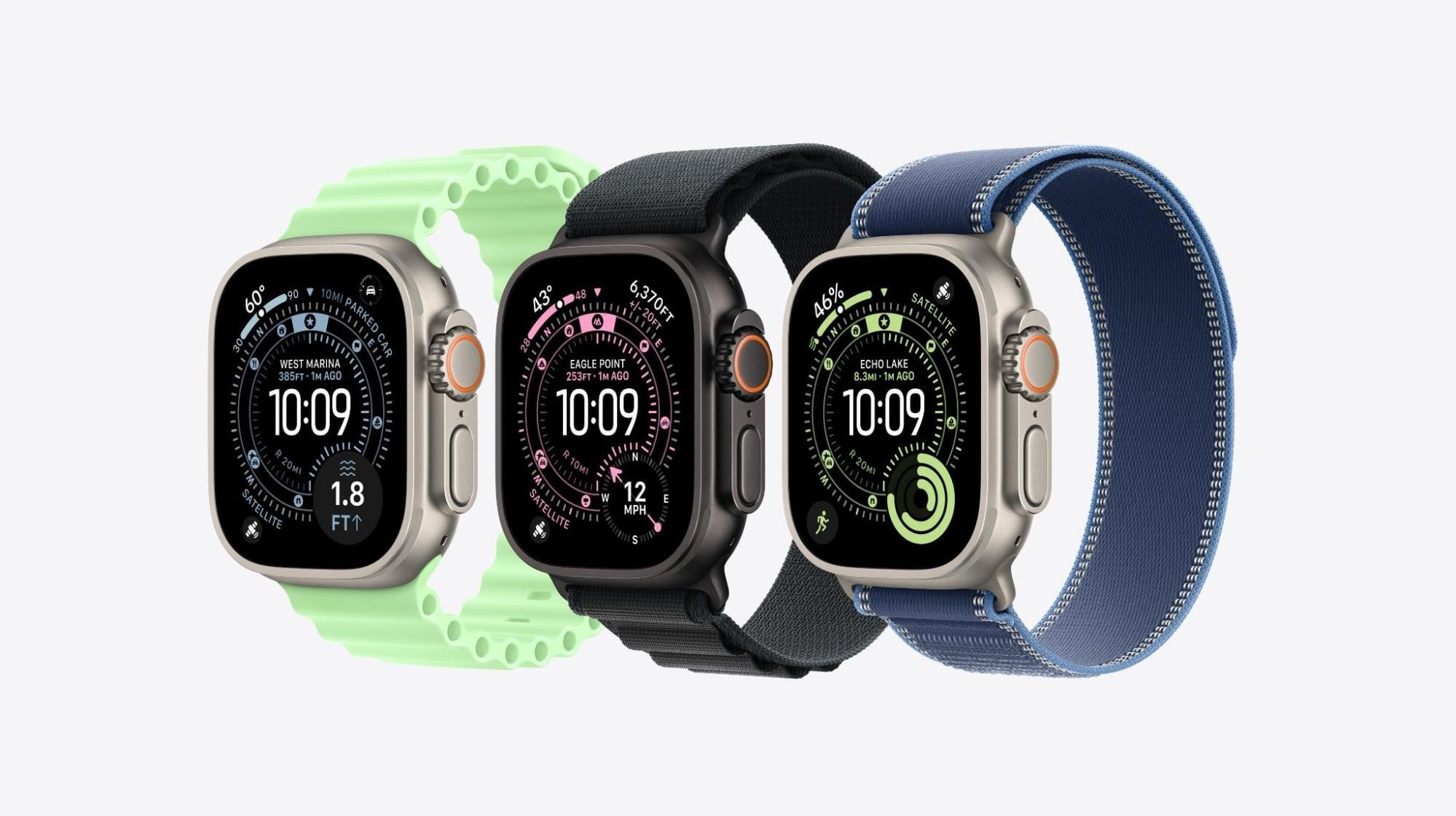
The Ultra 3 is built for people who need more battery life, durability, and outdoor capability than the regular Apple Watch lineup offers. It’s a sturdier, more capable model designed for time outdoors, in the water, or away from a charger for longer stretches.
Its biggest advantage is battery life. With up to 42 hours of battery life, you can go a full weekend away from a charger or track a very long hike without worrying too much about running out of power. It also charges quickly — a 15-minute charge gives you about 12 hours of use.
The screen is exceptionally bright, so it stays easy to read even in strong sunlight. Its titanium case and sapphire crystal front also make it better suited to handle knocks and more rugged conditions. Features like a siren and satellite connectivity can also be useful if you regularly spend time in more remote places.
It’s important to note that the Ultra 3 is a substantial watch. At 62 grams, it’s nearly twice the weight of the SE, and the 49mm case can feel large on the wrist. The extra battery life and durability are useful, but they do come with more bulk in day-to-day wear.
Best for: extended outdoor use, larger wrists, deep water activities
Not ideal for: small frames, casual use
Choosing the right size and band
How an Apple Watch feels on your wrist matters just as much as the features it includes. You’ll likely wear it for hours at a time, so the size and band you choose will have a big impact on day-to-day comfort.
Sizing
Most models come in 2 sizes. A smaller case is often easier to live with because it feels lighter, sits more neatly under sleeves, and is usually more comfortable for sleep tracking. A larger case gives you more room to tap options and read text, but it can feel bulky on a smaller wrist. If you’re unsure which to choose, the smaller version is often the safer option for comfort.
Band
Fabric or “loop” style bands are soft and breathable, ideal for sleeping or sensitive skin. Silicone bands are more practical if you swim or exercise often, as they don’t hold onto water and are easy to wipe clean.
You’ll also find Apple Watch versions created in collaboration with Nike and Hermès. These work like the standard models but come with distinct bands and watch faces. They change the look and feel of the watch, but not what it can do.
For more information, you can take a look at our complete guide to Apple Watch bands.
How I chose the best Apple Watches in 2026
I didn’t just look at the specs. I focused on what each watch is like to wear and use day to day — how it sits on your wrist, how often you need to charge it, and whether the health features give you information that’s genuinely useful.
I also considered how well each model handles everyday bumps, sweat, and water, and whether the higher-priced options offer enough extra value to justify the cost.
This is meant to help you choose the Apple Watch that fits your life best — whether you want something light and simple, something more full-featured, or something built for tougher use.
Frequently asked questions about Apple Watches
Which Apple Watch is best for most people?
The Series 11 is the best fit for most people because it sits in the middle of the lineup in the right way. It offers more health tools and a more refined overall experience than the SE, without the added size, weight, and cost of the Ultra.
Is the Apple Watch Ultra worth it?
The Apple Watch Ultra is worth it if you need longer battery life, a tougher build, and features designed for more demanding outdoor or water use. If your routine is more typical — workouts, daily wear, notifications, and general health tracking — the larger size and higher price may be harder to justify.
Is the Apple Watch SE still worth buying in 2026?
Yes, the SE is still worth buying if you want a lighter, lower-cost Apple Watch that covers the basics well. It gives up some of the more advanced health tools, but it still handles notifications, activity tracking, and day-to-day use reliably.
Which Apple Watch is best for fitness?
The Series 11 is the best choice for most people’s fitness needs because it covers everyday workouts, running, health tracking, and activity monitoring without the extra size and cost of the Ultra 3. The Ultra 3 is a better fit for long hikes, endurance training, and water activities, thanks to its longer battery life and more rugged design.
Which Apple Watch is best for smaller wrists?
The smaller Apple Watch case sizes are usually the most comfortable for smaller wrists, as they feel lighter and less bulky throughout the day. In the current lineup, that typically means the 40 mm Apple Watch SE or the 42 mm Series 11, which tend to sit more naturally on a smaller frame.
Do you need cellular service on an Apple Watch?
Cellular is only worth paying for if you want to use your Apple Watch without your iPhone nearby. It can be useful for walks, runs, or quick errands when you want to stay reachable without carrying your phone. If your iPhone is usually with you, the standard GPS model is usually enough.