How often should I scan my Mac for malware?
Posted on
by
Kamso Oguejiofor-Abugu

Macs come with built-in security features, but running your own malware scans gives you another way to check for harmful files that may have slipped through.
For most people, a monthly malware scan is usually enough for a routine check. It’s also a good idea to run a scan after downloading a file from an unfamiliar source or if your Mac starts behaving differently.
How often you scan depends on how you use your Mac — including how often you install apps, download files, or share documents across devices. Here’s how to decide when to scan your Mac, which types of scans to use, and a few simple ways to reduce the risk of malware.
How often should you scan your Mac: monthly, weekly, or right away?
You may want to scan more often if you regularly download apps, open email attachments, test browser extensions, use external drives, or handle sensitive work files. In those cases, a weekly scan can make more sense.
You should also run a scan whenever something feels unusual. Unexpected pop-ups, sudden slowdowns, browser changes, unfamiliar extensions, or strange app behavior are all good reasons to check your Mac right away.
Real-time antivirus protection can help catch threats as they appear, while manual scans give you a way to review what’s already on your Mac. Used together, they give you a clearer picture of whether anything suspicious needs your attention.
When should you scan your Mac right away?
Some situations are a good reason to run a malware scan straight away, rather than waiting for your next routine check. These include:
- After downloading or clicking something suspicious: Installing an app outside the App Store, opening an unexpected email attachment, or clicking a link that leads to an unfamiliar website can expose your Mac to malware. Scanning right away can help ensure nothing slipped through during one of these events.
- You notice unexpected browser changes: If your homepage suddenly looks different or you see new extensions you don’t recognize, your browser settings may have been changed without your permission. A scan can help find what is causing the problem and restore your usual settings.
- Your Mac starts acting differently: If your Mac feels slower than usual, starts heating up, or the fan is running loudly, it can be a sign of unusual background activity. A scan can help you see whether there’s anything running that needs your attention.
- Security warnings appear on your screen: Repeated pop-ups telling you your computer is at risk and asking you to download software can be a sign of malware or scam software. Running a scan can help you understand what’s causing the alerts and whether anything harmful is installed.
- You get alerts about your account activity: If you receive a notice about a login attempt you didn’t make, changing your password is your first step. The second is scanning your Mac to check for spyware or hidden tracking software that may have recorded your details.
- Before backing up your Mac: Scanning your Mac before creating a backup or moving to a new device is a simple step that helps make sure you’re not carrying unwanted software or infected files to another device.
Does your Mac already scan for malware?
Yes, it does. Every Mac includes built-in security features that help check apps for malware and block known threats before they can run.
Before you open a new app for the first time, macOS confirms the app comes from a recognized developer and hasn’t been changed since it was created. Apple does this using a tool called Gatekeeper.
macOS also includes a background tool called XProtect that checks new apps for known malware and stops them from running. In some cases, it can also find and remove malware that may have made it onto your Mac.
While these protections are a good starting point, they work mostly in the background, so they don’t give you much information about what they’re doing. A dedicated malware scanner gives you a clearer way to check your Mac, review scan results, and run extra scans after higher-risk moments.
Manual scans vs real-time protection: What’s the difference?
There are two main ways to scan for malware. You can run manual scans yourself when you want to check your files and apps, or you can use real-time protection, which monitors activity continuously in the background.
Understanding how these work together helps you decide how often you really need to run a scan.
- Manual scans: These are checks you start yourself. You might decide to scan your whole Mac once a month, or check a specific file you just downloaded. Manual scans help you review what’s already on your Mac and spot anything suspicious that may have slipped through earlier.
- Scheduled scans: These work just like manual scans, but they run automatically at set times. For example, you might schedule a scan once a week or once a month so your Mac gets checked regularly without needing to remember it yourself.
- Real-time protection: This stays active continuously. Instead of waiting for you to start a scan, it keeps an eye on things as you browse the web, open emails, or download files. If something harmful appears, it can often block it before it has a chance to run.
Manual scans are useful, but they work best as part of a broader approach. Real-time monitoring helps block threats as they appear, while manual scans give you a chance to check your Mac more closely after downloads, installs, or higher-risk activities.
What kind of scan should you run?
The best type of scan depends on what you’re trying to check. Sometimes you may just want a quick look at recent downloads, while other situations call for a more thorough review of your Mac.
1. Quick scan: A quick scan focuses on the most common areas where malware tends to hide, like system folders, startup items, and downloads. It’s useful when you want a fast check without scanning your entire Mac, especially if something doesn’t feel right and you want a quick first look.
2. Full scan: A full scan checks your Mac’s entire system, including all files, applications, and hidden areas. This takes longer, but it gives you the most complete picture of what’s on your device. Full scans make the most sense:
- as your regular monthly scan
- after installing software from outside the App Store
- if you’ve noticed unusual behavior or want a complete check
- the very first time you set up your antivirus software
3. File or folder scan: This type of scan focuses on a specific file or folder. It’s ideal for everyday situations like:
- scanning a file you just downloaded
- checking an email attachment before opening it
- reviewing files from an external drive
In practice, many people run a full scan once a month, then use quick or file scans when something doesn’t feel right.
Can malware hide from a normal scan?
Yes. Some types of malware are harder to detect than others, especially if they’re designed to avoid leaving obvious traces behind on your Mac.
For example, fileless malware can run through scripts, memory, or trusted system tools rather than sitting on your Mac as one obvious suspicious file. That can make it harder for some scans to spot.
This doesn’t mean scans are ineffective. A manual scan can still find many common threats, especially those tied to downloads, apps, or attachments.
Real-time antivirus protection adds another layer by monitoring activity as it happens, rather than only checking files when they’re already on your system. Used alongside manual scans, real-time protection gives you a better way to keep an eye on suspicious activity.
How to reduce the number of malware scares on your Mac
Regular scans can help you spot issues early, but a few everyday habits can reduce how often you run into suspicious files, fake warnings, or unexpected behavior in the first place:
- Keep macOS and your apps updated: Software updates often include security fixes that close gaps malware can exploit. Keeping macOS and your apps current gives your Mac the latest protections available from Apple and other developers.
- Download software from trusted sources: Getting your software directly from the creator’s own website or the App Store reduces the risk of downloading tampered or fake software.
- Be careful with browser extensions: The more extensions you install, the harder it can be to spot which one is causing unwanted changes. Keep only the extensions you trust and use regularly.
- Don’t approve prompts you don’t recognize: If a window pops up asking for permission and you aren’t sure why, it’s okay to decline. Unexpected permission requests can sometimes be linked to unwanted software or misleading pop-ups.
- Ignore fake “update” pop-ups: Some malicious websites display urgent messages claiming your browser, media player, or Mac is out of date. Instead of clicking those alerts, update apps through the App Store or the app’s official settings whenever possible.
- Use real-time antivirus protection: Your Mac security app can monitor downloads, apps, and files as you use your device. This means suspicious activity may be detected earlier, without needing to rely entirely on manual scans.
- Run a scan after risky moments: Instead of scanning at random, try tying your checks to specific moments, like after you’ve downloaded a file from an unfamiliar site.
So, how often should you scan your Mac?
How often you scan your Mac depends on how you use it. For most people, once a month is a solid baseline. If you frequently download software, handle client files, or use your Mac for banking and work, weekly scans may be a better fit.
You should also run a scan if something feels unusual. Unexpected pop-ups, suspicious downloads, browser changes, or sudden slowdowns can all be signs that your Mac needs a closer look.
Regular scans are helpful, but they’re most effective when you also have real-time protection that can help catch threats as they appear.
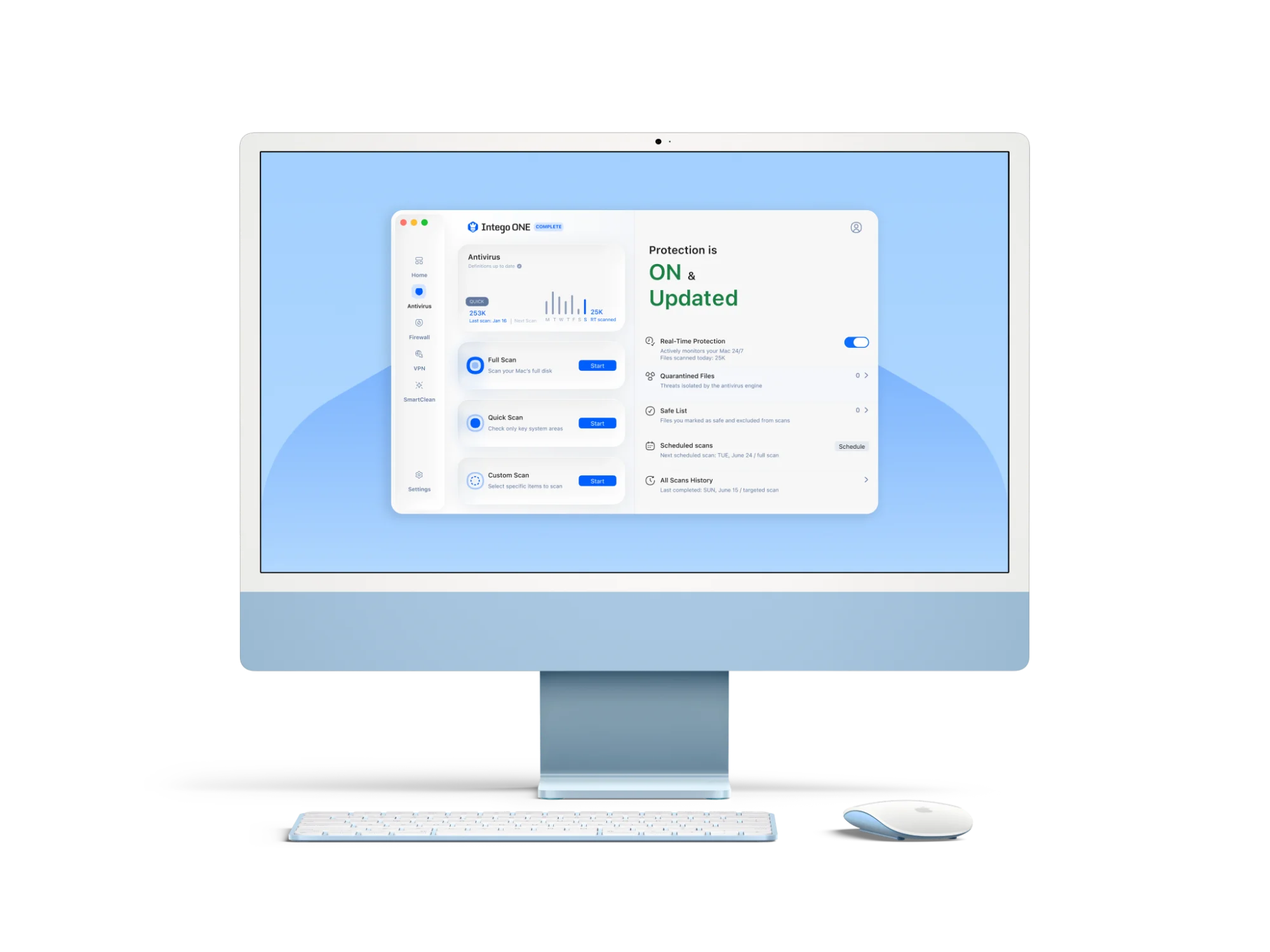
If you want a simpler way to stay on top of malware checks, Intego ONE for Mac can monitor threats in the background and give you a clear way to run a scan when your Mac behaves unexpectedly.
Frequently asked questions
How often should I scan my Mac for malware?
For most people, once a month is a sensible routine. If you regularly download apps, open attachments, or handle sensitive work, a weekly scan may be more appropriate. You should also scan immediately after opening an unfamiliar file or noticing unusual behavior.
Should I scan my Mac every day?
Probably not. Scanning your Mac every day is unnecessary for most people and can quickly become frustrating. As long as you have real-time protection turned on, your Mac is being monitored continuously in the background. Save manual scans for occasional check-ins or moments when something doesn’t feel quite right.
Does macOS scan for malware automatically?
Yes, macOS has built-in protections like XProtect, which can find and stop threats automatically. This happens mostly in the background, so you don’t always see what it’s doing or have a say in when it runs.
What is the best time to run a malware scan on Mac?
It’s best to run scans when you aren’t actively using your Mac, since full scans can take a little time depending on how many files you have. You can also schedule scans to happen at a time that’s convenient for you.
Can a Mac have malware even if it seems normal?
Yes, some types of malware may not show obvious signs right away. That’s why occasional scans and real-time protection are useful, even if everything seems fine on your Mac.
Is a quick scan enough?
Quick scans are useful for when something feels off, but they don’t check your entire Mac the way full scans do. Run a full scan at least once a month, or whenever your Mac needs a more thorough check.
Can malware hide from Mac antivirus scans?
Some malware is designed to be harder to detect than others. Threats like fileless malware stay only in the computer’s memory rather than saving themselves as a file, which can make them much harder to find.